

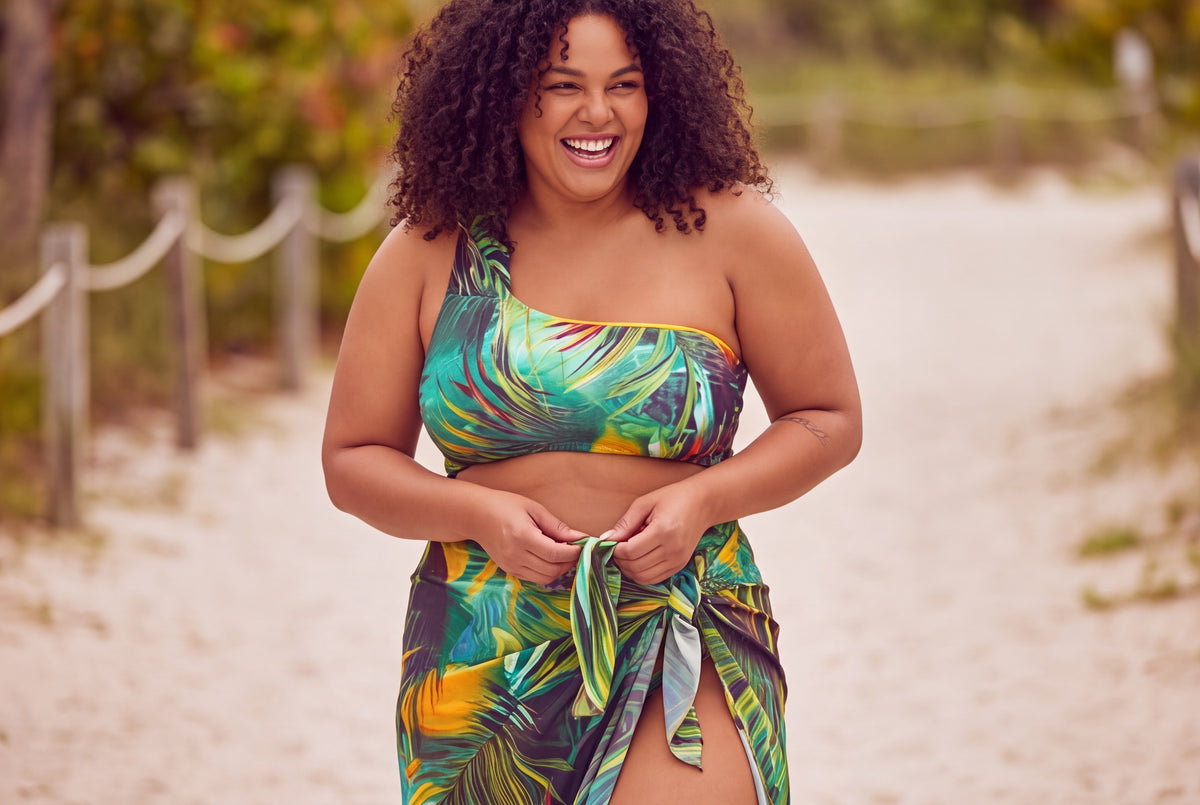
The Cut Out One Piece: A Guide to Fit, Support, and Wearing It Fully
Key Takeaways
- A well-placed cut out one piece reduces torso compression and heat buildup, making it a practical choice for women navigating perimenopause and body sensitivity, not just a trend piece.
- According to a SAGE Journals study, 34.9% of women prioritize body measurement information when buying swimwear, which is why cut placement relative to your specific proportions matters more than silhouette alone.
- Chlorine-resistant fabrics are critical for cut out swimwear because standard spandex can become brittle after roughly 50 hours of pool exposure, while chemically modified variants hold elasticity for over 300 hours.
- Side cut outs and waist windows are the most universally flattering cut out styles for fuller busts and curved bodies, because they create visual proportion without reducing structural support at the chest.
- Extending a swimsuit's wear life by just nine months can reduce its carbon and water footprints by up to 20%, making fabric quality and proper care a meaningful sustainability decision.
The cut out one piece has a reputation that precedes it, and for many of us, that reputation has kept us from trying it. It reads as a young-body style in most mainstream marketing: angular, minimal, worn by women who seem unbothered by the question of where the fabric ends. So we reach for it in a store, hold it up, and put it back. Not because the style is wrong for us, but because nobody has shown us what it actually does for a body like ours.
What shifted my thinking was paying attention to the mechanics of it. A cut out is a design decision about negative space. Where fabric is removed changes how the remaining fabric behaves, how the suit distributes weight, and how the wearer carries herself. That is a fit conversation, not a trend conversation. And once you start seeing it that way, the cut out one piece becomes one of the more thoughtful silhouettes in the swimwear category.
This guide is for the woman who wants real guidance: which cut placements work for a fuller bust, how to read fabric quality before you buy, what to look for if you are navigating post-procedure sensitivity, and how to find a cut out one piece swimsuit that holds its shape past the first season.
Why the Cut Out One Piece Has Earned Its Place in Every Serious Swimwear Wardrobe
The cut out one piece is a one-piece bathing suit with intentional openings, most commonly at the sides, waist, or underbust, that create visual interest and affect how the suit fits and feels on the body. It is not a swimwear category defined by exposure. It is defined by proportion.
The Functional Case for Cut Outs
Consider a woman in her late forties with a fuller bust, managing the heat sensitivity that often comes with perimenopause. A traditional one-piece with full torso coverage can feel suffocating by midday, especially in direct sun. A well-placed side cut out reduces the fabric mass pressing against the torso without removing the underwire support she relies on at the chest. The suit breathes. She stays cooler. The support structure remains intact. That is a functional benefit, and it is one that rarely gets named in trend coverage.
According to Fitfab50, strategic cut outs have moved beyond trend-driven design to become a primary feature in inclusive swimwear, with waist-defining and curve-highlighting silhouettes now made for all sizes. This shift reflects something real: the cut out one piece works because of what it does structurally, not just how it looks.
Cut Outs and Post-Procedure Comfort
For women recovering from abdominal procedures, breast surgeries, or other interventions, the placement of a cut out matters in a specific and practical way. A cut out positioned away from a scar site reduces direct fabric pressure on sensitive tissue. An underbust cut out, for example, keeps the chest fully covered while relieving compression at the upper abdomen. This reframes the style entirely: the cut out becomes adaptive dressing, not a statement about skin.
One in four millennials reported feeling most confident in a cut out one-piece suit, according to Prettylittlething, which reflects how broadly this silhouette has been adopted. But confidence for the woman reading this guide is less about trend alignment and more about finding a suit that holds her well and lets her move freely. That is the bar worth meeting.
How to Find a Cut Out One Piece That Actually Fits Your Body
Finding the right cut out one piece swimsuit starts with understanding your proportions, specifically your bust size, torso length, and where you carry volume. These three factors determine which cut placements will work with your body and which will create tension, gaping, or compression in the wrong places.
 SHOPTHE LOOK
Bust Support and Cut Placement
For a fuller bust, the most important rule is that the cut out should never interrupt the support structure at the chest. Look for suits with underwire, internal power mesh, or wide side boning that keeps the bust lifted regardless of where the opening sits. A side cut out that begins below the underwire line is ideal: it creates breathing room at the ribs without destabilizing the chest. An underbust cut out can work beautifully if the fabric above it is reinforced with a built-in bra panel.
Avoid cuts that bisect the chest panel or remove fabric from the area where you need the most structural support. A front cut out one piece with an opening at the sternum, for example, tends to work better on smaller busts where the chest panel does not need to carry as much weight.
Torso Length and Proportion
Torso length affects how a cut out one piece sits on the body. Women with longer torsos often find that standard sizing pulls at the crotch and compresses the midsection, which distorts where the cut out actually lands. According to Berlook, long-torso specific designs typically add approximately 1.5 inches of body length compared to standard sizing, which prevents pulling and keeps the cut out positioned where the designer intended it.
If you are between sizes, size up in the torso and look for adjustable straps. A cut out that rides up because the suit is too short will gap at the edges and lose the clean line that makes the style work.
Reading the Construction Before You Buy
The edges of a cut out are where construction quality becomes visible. On a well-made suit, the edges are finished with a clean binding or a narrow elastic that lies flat against the skin. On a fast-fashion piece, those edges are often raw or minimally finished, which means they roll, fray, or stretch out of shape after a few wears. Run your finger along the cut out edge before purchasing. If it curls or feels thin, the suit will not hold its shape through a season of real use.
A survey of 3,348 women published in MDPI found that 34.9% of participants prioritize size and body measurement information when purchasing swimwear to determine proper fit. Specific measurements at the bust, waist, and hip are more reliable than general size labels, especially for a style where cut placement is as important as overall coverage.
The Cut Out One Piece Styles That Flatter Real Bodies at Every Size
Different cut out placements create different visual effects and suit different body proportions. The goal in each case is proportion, not concealment. The cut out is used to create balance and highlight the body's natural lines, not to minimize or hide anything.
 SHOPTHE LOOK
Side Cut Outs
The side cut out one piece swimsuit is the most versatile silhouette in this category. An opening at the side waist draws the eye inward and creates the appearance of a defined waist on bodies that carry volume evenly. For plus size bodies, a side cut out with a wider fabric panel at the front and back maintains coverage while adding visual structure. This style works across a wide range of bust sizes because the chest panel remains intact.
For women with an hourglass or pear shape, a side cut out that sits at the natural waist amplifies the waist-to-hip ratio in a way that feels celebratory rather than constructed. The cut does the work; the body does the rest.
Waist Windows and Underbust Openings
A waist window, a horizontal or oval opening centered at the front midsection, works well for athletic and rectangular body shapes by adding the visual suggestion of a waist curve. For fuller figures, a smaller waist window with reinforced edges on either side keeps the opening from stretching and maintains the intended shape throughout the day.
The underbust cut out is particularly well-suited for women with a larger bust because it keeps the entire chest covered and supported while opening the fabric just below the bra line. This placement also works well for women who are post-procedure at the abdomen, since the opening can be positioned above a scar site.
Asymmetric and Panel Cut Outs
Asymmetric cut out one pieces, where the opening falls on one side rather than both, create a dynamic line that reads as intentional and design-forward. This style tends to suit petite and straight-body frames particularly well. For larger busts, asymmetric cuts require careful attention to how the remaining fabric distributes support: one-sided openings can shift the chest panel if the construction is not reinforced on the open side.
A specific high-waisted cut out swimsuit reviewed by People received over 13,500 five-star ratings, with more than 1,200 reviewers explicitly citing it as flattering across a range of sizes including DD busts. That kind of broad satisfaction across body types points to what good cut placement and construction can do when the design starts from real proportions.
Fabric, Care, and Longevity: Making Your Cut Out One Piece an Investment Worth Keeping
A cut out one piece swimsuit is only as good as the fabric holding its edges. This is where the investment-piece argument becomes concrete: the wrong fabric will stretch, fade, and lose its shape at the cut out edges within a single season, while the right fabric will hold its structure for years.
Why Chlorine Resistance Matters for This Style
Cut out edges are the first place a swimsuit shows wear. The elastic binding at the opening is under constant tension and exposure, which means fabric degradation shows up there before anywhere else. According to MDPI, swimwear materials immersed in chlorinated water experienced a 12.4% reduction in breaking force after 200 hours and a 65.7% reduction after 300 hours. Standard spandex can become brittle after approximately 50 hours of pool exposure, while chemically modified spandex variants maintain elasticity for over 300 hours in chlorinated environments.
For a cut out one piece you plan to wear regularly at the pool, look for fabrics labeled chlorine-resistant or made with modified elastane. The difference in longevity is significant, and it shows most clearly at the cut out edges where tension is highest.
UPF Protection and Fabric Density
UPF 50+ fabric, verified by the AATCC TM183 standard, blocks more than 98% of UVA and UVB rays. For a cut out one piece worn in direct sun, the covered panels should carry this rating. The cut out areas themselves are open skin, so pairing the suit with a mineral SPF at those exposed zones is a straightforward part of the routine.
 SHOPTHE LOOK
Higher-density warp knit fabrics, the kind used in artisan-crafted swimwear, also hold cut out edges more cleanly than loosely woven alternatives. The fabric does not stretch beyond its intended shape, which means the opening stays where the designer placed it rather than migrating or widening over time.
Care Practices That Preserve the Cut Out
Rinse the suit in cool fresh water immediately after each wear. Hand wash with a gentle, pH-neutral detergent rather than machine washing, which puts stress on the cut out edges and binding. Lay flat to dry in the shade. Avoid wringing the suit, especially at the cut out areas, since twisting distorts the elastic binding and causes the edges to lose their clean line.
According to Lycra, extending a garment's wear life by just nine months can reduce its carbon and water footprints by up to 20%. For a cut out one piece, that nine months of additional life comes directly from how well you care for the fabric and edges between wears. The suit that gets rinsed and dried properly after every use looks and performs differently after two seasons than one that does not.
Wearing the Cut Out One Piece with Intention
The cut out one piece earns its place in a considered swimwear wardrobe because it is a design that starts from the body's geometry. The opening is not decorative. It is structural. It changes how the suit breathes, how the fabric distributes weight, and how the wearer moves through the water and along the shore.
At Ir Al Sol, we think about cut placement the way Colombian artisans have always thought about it: the negative space in a garment is as deliberate as the fabric that remains. What is removed is chosen with the body's natural lines in mind, not a trend board. That philosophy is what separates a cut out one piece that holds you well from one that simply looks interesting on a hanger.
For the woman who has been putting this style back on the rack, the invitation is to look at it differently. The cut out is a design decision, not a dare. Where it sits on your body changes everything about how the suit feels and how you carry yourself in it. Find the placement that works with your proportions, choose a fabric built to last, and wear it fully.