
The Wellness Retreat Guide for Women Who Are Ready to Return to Their Bodies
At some point in your 40s or 50s, the body starts asking questions you have not had time to answer. Not dramatically, not all at once, but in small persistent ways: the sleep that no longer restores, the hormonal shifts that rewrite your energy and your skin, the sense that the person in the mirror is mid-sentence and waiting. A wellness retreat is not an escape from that conversation. It is, for many women, the first real chance to have it.
The shift happening in wellness travel right now is being led by midlife women, and it goes deeper than spa packages or scenic locations. According to Globenewswire, 70% of women ages 40 to 49 report feeling overwhelmed by everyday life. These women are not booking retreats for aesthetics. They are booking them because their bodies are asking for something different, and they are finally listening.
This guide covers how to find, evaluate, and prepare for a wellness retreat that actually delivers, and then goes a layer deeper into what retreat travel restores in midlife and how to carry that restoration home.
What Makes a Wellness Retreat Travel Experience Worth Your Time and Money
A wellness retreat is a structured or semi-structured travel experience designed around rest, movement, nourishment, and mental restoration, as distinct from a standard vacation where wellness is incidental. The difference matters because it determines whether you return home genuinely restored or simply rested.
Programming Depth and Practitioner Credentials
The clearest marker of a worthwhile retreat is the quality of its practitioners. Look for licensed professionals, not just certified instructors, particularly if the retreat addresses hormonal health, somatic therapy, or nutrition. Bookretreats reports that somatic therapy has become the fastest-growing wellness treatment within retreat programming, with a 141% year-on-year increase since 2023. That growth reflects real demand, but it also means the space is filling with underprepared providers.
Environment as Part of the Program
The physical setting is not decoration. Research published in Nature found that visits to blue spaces perceived as having excellent water quality were associated with significantly lower anxiety. A retreat built around ocean or lake access is not just scenic; it is physiologically relevant. Retreats that integrate their natural setting into programming, rather than treating it as a backdrop, tend to deliver more lasting results.
 SHOPTHE LOOK
How to Choose the Right Wellness Retreat Travel Destination for Your Goals
The right wellness retreat destination depends on what your body and nervous system actually need, not what looks appealing in photos. Start by identifying your primary goal: deep rest, hormonal support, movement, community, or some combination.
Match the Modality to the Need
Ayurvedic retreats in India and Sri Lanka are well-suited for women navigating perimenopause, with programming that addresses sleep disruption, inflammation, and nervous system regulation. Livemint notes that around 80% of women arriving at specific ayurvedic wellness centers report symptoms like nighttime waking, irritability, and brain fog without initially identifying them as part of perimenopause. Thermal spa retreats in Central Europe address mineral depletion and circulation. Beach-based retreats in coastal Colombia, Costa Rica, or Portugal combine sun exposure, salt water, and movement in ways that support circadian repair.
Consider Travel Distance Honestly
A long-haul flight followed by jet lag can work against the restoration you are seeking. For women with significant sleep disruption or adrenal fatigue, a closer destination with less transit stress may deliver more benefit than a prestigious far-flung property. The goal is arrival, not achievement.
The Best Wellness Retreats in the World Right Now
Globally recognized wellness destinations share a few consistent qualities: they integrate their environment into programming, they have depth in at least one modality, and they attract practitioners with real credentials rather than trend-chasing certifications.
Properties Worth Knowing
SHA Wellness Clinic in Alicante, Spain, is one of the most medically rigorous wellness resorts in the world, with programming that includes hormonal health assessments and personalized nutrition protocols. Kamalaya in Koh Samui, Thailand, is known for its burnout recovery programs and integration of Eastern and Western wellness traditions. Six Senses properties across Bhutan, Oman, and Fiji are consistently cited for their sleep programming and biometric-based personalization. For women specifically navigating perimenopause, The-ethos has documented a growing category of retreats designed explicitly around this transition, with programming that addresses hormonal cycles rather than ignoring them.
The common thread across these properties is specificity. They know who they are serving and they design accordingly.
Top Wellness Retreat Destinations Across the United States
The United States has a strong domestic wellness retreat landscape, with meaningful variation by region and modality.
Desert and Mountain Destinations
Sedona, Arizona, is one of the most established wellness destinations in the country, with a concentration of retreat centers focused on somatic work, meditation, and energy-based therapies. The high desert environment, with its dry heat and dramatic light, has a genuine physiological effect on the nervous system. Canyon Ranch, with properties in Lenox, Massachusetts, and Tucson, Arizona, is among the most medically credentialed wellness resorts in the US, with programming that includes hormonal health, sleep medicine, and integrative nutrition.
 SHOPTHE LOOK
Coastal Options
The Florida Gulf Coast, particularly around Naples and Sarasota, has a growing cluster of wellness-focused properties that combine thalassotherapy, beach access, and integrative health programming. The Pacific Coast, from Big Sur to the Olympic Peninsula, is well-suited for women seeking nature immersion and nervous system reset. AARP research found that 95% of adults age 50-plus agree that travel is good for their mental health, a figure that underscores why domestic accessibility matters for this demographic.
Structured Reset vs. Laid-Back Escape: Which Wellness Retreat Style Fits You
The two dominant retreat formats, structured clinical programs and self-directed resort stays, serve genuinely different needs. Choosing the wrong one is a common and expensive mistake.
| Format | Best For | Watch Out For |
|---|---|---|
| Structured Program | Women with specific health goals, burnout recovery, or perimenopause symptoms | Over-scheduling that replicates the stress of daily life |
| Self-Directed Resort Stay | Women who need unstructured rest and autonomy over their time | Lack of accountability or guidance when motivation dips |
| Women's Group Retreat | Women seeking community and shared experience alongside personal restoration | Group dynamics that create social pressure instead of ease |
Dr. Mindy Pelz, author of The Menopause Reset, has noted that women are biologically wired for connection and will often pay to put themselves in environments where that connection happens naturally. A women's group retreat format can amplify the restorative effect of the experience, provided the group size stays small enough for genuine intimacy.
Do Your Homework Before Booking: Essential Questions to Ask Any Wellness Retreat
Booking a wellness retreat without vetting it properly is genuinely risky, financially and physically. The wellness travel market has grown fast enough that marketing now frequently outpaces substance.
Questions That Reveal Program Quality
- What are the credentials of the practitioners leading each modality?
- Is there an intake assessment before arrival, or does everyone follow the same schedule?
- How does the retreat accommodate dietary needs, allergies, or health conditions?
- What is the cancellation policy, and does it account for medical emergencies?
- What is the ratio of guests to practitioners during group sessions?
A retreat that cannot answer these questions clearly is one worth skipping. Legitimate properties welcome detailed questions because they have real answers. Dwellrefine notes that wellness travel in 2026 has shifted toward intentional recalibrations focused on hormonal cycles and deep restorative rest, which means the best retreats now build personalization into their intake process from the start.
Solo Women's Wellness Retreat Travel: What to Look For and Where to Go
Solo wellness travel among women over 50 is one of the fastest-growing segments in the travel market. JourneyWoman projects that solo travel spending among women 50-plus will increase by 138% between 2025 and 2035. This is not a niche. It is a primary market.
What Solo Travelers Should Prioritize
Safety and social infrastructure matter more for solo travelers than for those arriving with companions. Look for retreats with structured social programming, shared dining, and facilitated group experiences that make connection easy without forcing it. Women-only retreats and small-group formats tend to create the most natural community. Properties that assign a wellness concierge or personal guide to solo guests add meaningful support without being intrusive.
Destinations with strong solo female travel infrastructure include Portugal, Costa Rica, Bali, and New Zealand. Each combines personal safety, English-language accessibility, and a mature wellness retreat market.
Personalized Wellness Experiences: Why One-Size-Fits-All Programs Fall Short
Generic retreat programming, the kind that puts every guest through the same schedule regardless of their health status, goals, or nervous system needs, is the wellness equivalent of a sample-size garment. It fits almost no one well.
What Real Personalization Looks Like
Genuine personalization begins before arrival with a detailed health intake that covers sleep patterns, hormonal status, stress history, dietary needs, and movement preferences. On arrival, a practitioner reviews that intake and adjusts the program accordingly. This is different from offering a menu of optional add-on treatments, which is customization in name only.
 SHOPTHE LOOK
The retreats doing this well tend to have lower guest-to-staff ratios and longer minimum stays, typically five to seven nights, because real recalibration takes time. Bookretreats data shows that retreats have become a primary planned wellness expenditure in 2026, ranking higher than spa treatments, supplements, and gym memberships for the first time. That investment deserves a program built around the individual, not the average.
Connecting With Nature: Why Location Is the Most Underrated Part of Any Wellness Retreat
The surrounding environment is not a backdrop. It is an active part of the therapeutic experience, and the research supports this more strongly than most retreat marketing acknowledges.
The Science Behind Blue and Green Spaces
A scoping review of 39 studies found that 98% of research demonstrated mental health improvements when individuals engaged with natural outdoor environments. Water environments specifically, what researchers call blue spaces, have a measurable effect on anxiety. The Nature study found that visits to blue spaces with excellent water quality were associated with significantly lower anxiety scores compared to those with lower perceived quality.
This matters practically when choosing a retreat. A property with genuine ocean or lake access, where water immersion is part of the daily rhythm rather than a scheduled activity, delivers something that no amount of indoor programming can replicate. Morning light exposure near water also supports circadian repair, which is particularly relevant for women experiencing sleep disruption during perimenopause.
Luxury Wellness Retreat Travel vs. Budget-Friendly Options: Getting the Most From Either
Transformative wellness experiences exist across a wide price range, but the value equation differs in important ways.
What Luxury Actually Buys
At luxury properties, the premium typically covers practitioner quality, personalization depth, lower guest-to-staff ratios, and the elimination of logistical friction. When you are not thinking about transportation, meal planning, or scheduling, your nervous system has more capacity to actually rest. That is a real benefit, not just comfort.
What Budget Retreats Must Still Provide
A budget-friendly retreat can deliver genuine restoration if it has qualified practitioners, a natural setting with outdoor access, clean and nourishing food, and enough unstructured time for the nervous system to downregulate. The non-negotiables are practitioner credentials and environment quality. Everything else is negotiable. Europeanspamagazine notes that travelers are increasingly seeking experiences that move away from overstimulation, with rising demand for no-tech zones and design that supports circadian repair. These features appear at both ends of the price spectrum when the property prioritizes them.
The practical information above covers the how of wellness retreat travel. What follows is the why, and specifically, what this kind of travel restores in midlife that nothing else quite reaches.
Your Body Is the Destination: What Retreat Travel Actually Restores in Midlife
The body in midlife is not broken. It is recalibrating, and it is doing so under conditions that most daily environments are not designed to support. Fluctuating hormones affect sleep, temperature regulation, cognitive clarity, and sensory sensitivity. The nervous system's threshold for stimulation narrows. What used to feel manageable starts to feel like too much.
A wellness retreat, at its best, creates the conditions the body needs to do what it already knows how to do: restore. Not through a prescribed program, but through the removal of the constant demands that prevent restoration from happening. Rest is not lazy. For most of us in this season of life, it is the most productive thing we can do for our bodies.
According to Globenewswire, 60% of women aged 40 to 64 experiencing menopause symptoms report that these symptoms negatively affect their emotional or mental health. A retreat that acknowledges this reality, rather than offering a generic wellness menu, gives the body something it rarely receives: permission to be exactly where it is.
The Ritual of Dressing for Rest: Why What You Pack for a Wellness Retreat Matters More Than You Think
There is a version of retreat packing that treats clothing as an afterthought. Grab a few swimsuits, toss in a cover-up, done. Most of us have done this and spent the first two days of a trip adjusting, pulling, and quietly wishing we had packed differently.
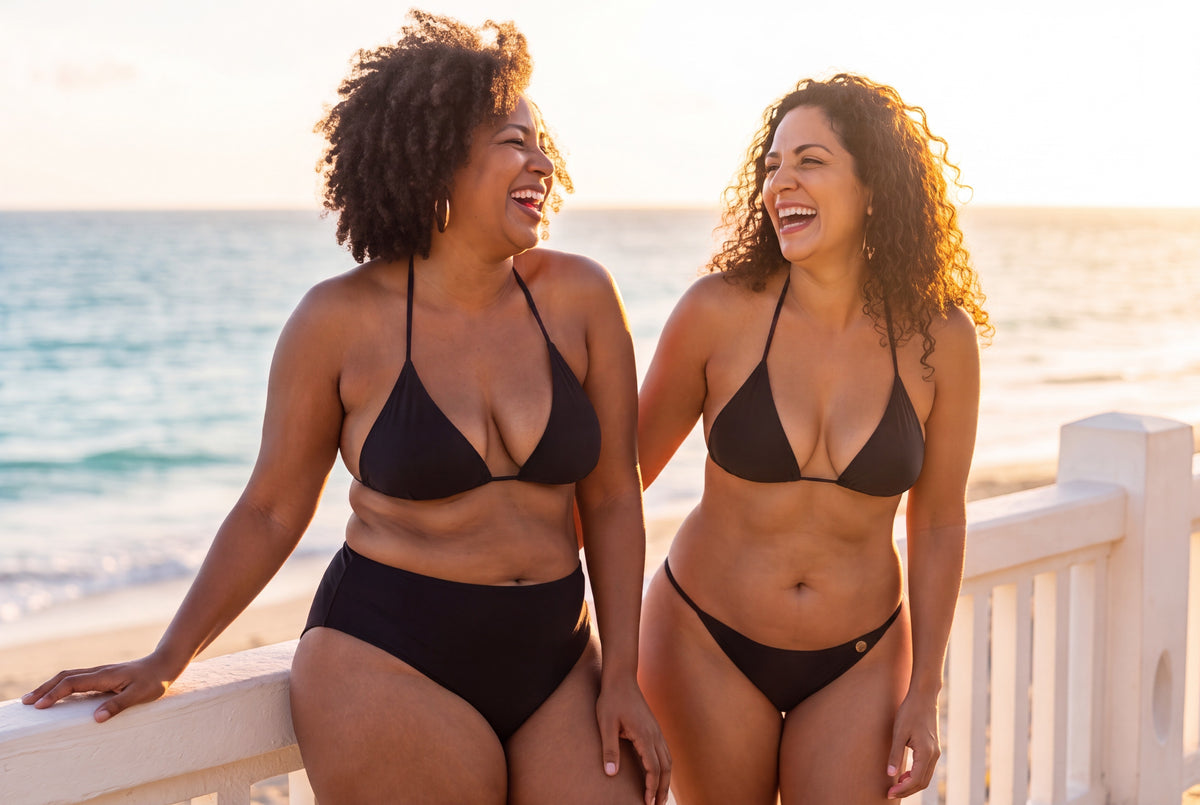
What we wear against our skin during a retreat shapes how present we are able to be. Fluctuating estrogen during perimenopause makes many women more sensitive to texture, fit, and fabric weight. A suit that gaps, slides, or loses its shape in the water is a constant low-grade distraction. A suit that fits the body as it actually is, with real support and real coverage, disappears into the experience in the best way.
Clinical psychologist Hillary Ammon, PsyD, has noted that when women feel good about their appearance, they tend to feel more confident in social settings and in themselves overall. Dr. Iulia Rogaten, a researcher in mental health and well-being, put it plainly: satisfaction with clothing choices directly predicts well-being, not because of vanity, but because clothes help us show up and belong.
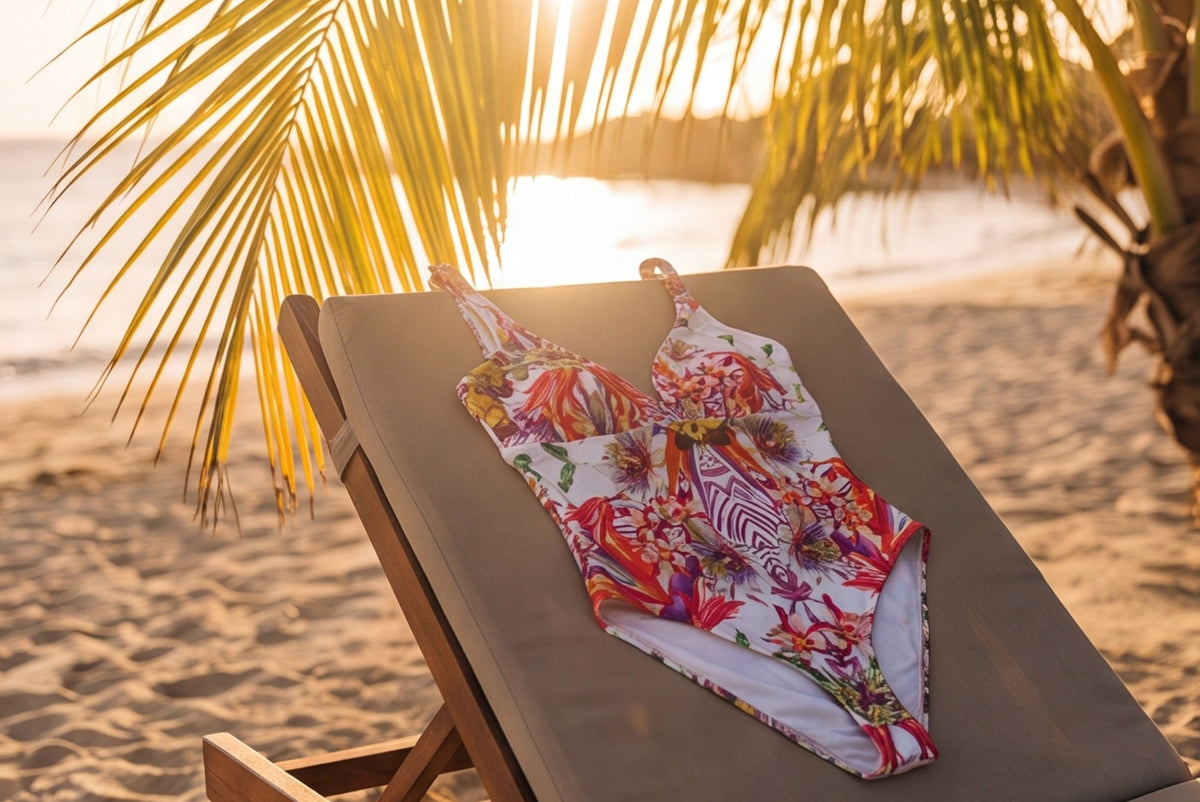
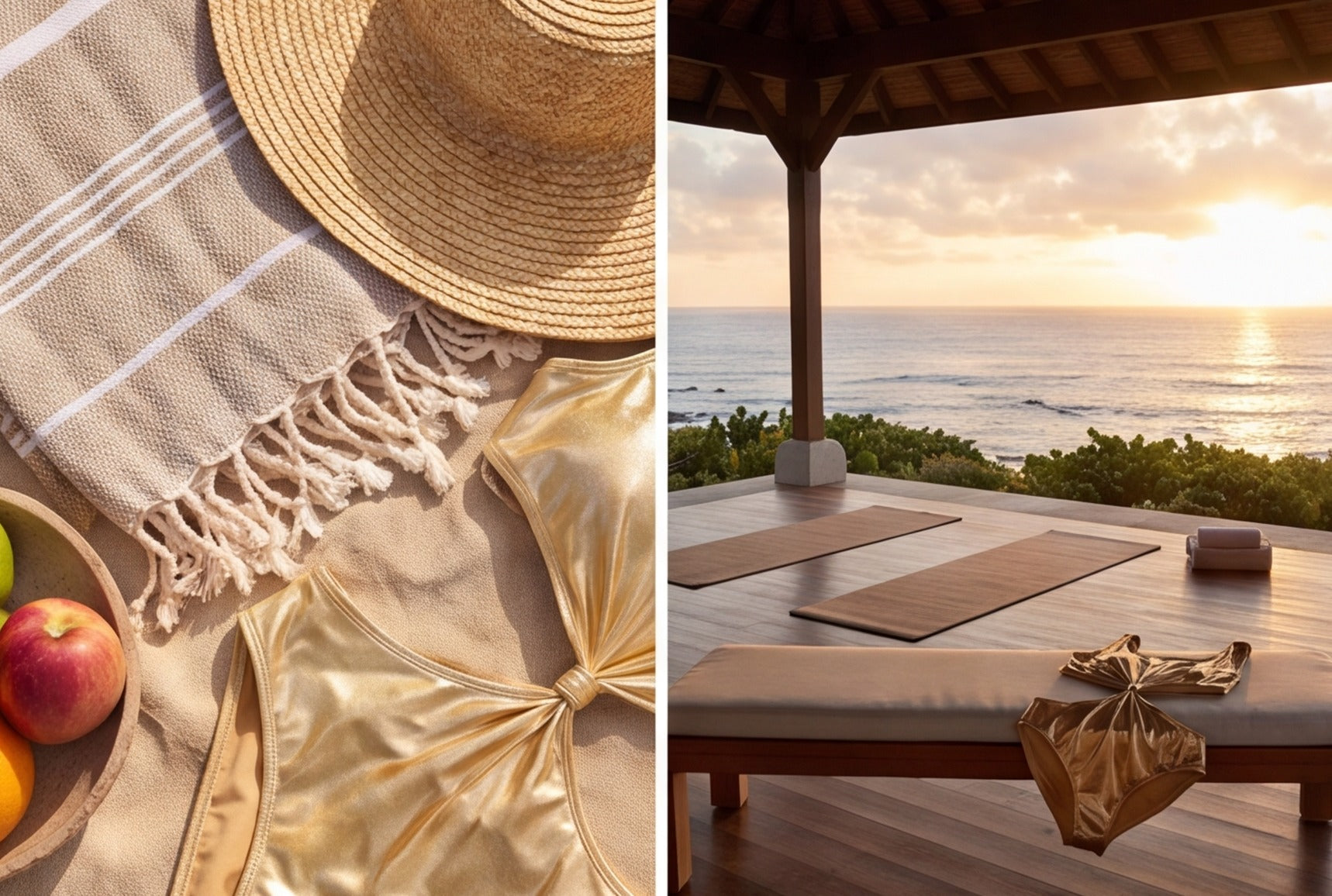
The investment piece argument applies here with particular clarity. One well-fitted, chlorine-resistant suit that moves with the body across pool, beach, and dinner is worth more than a bag of fast-fashion pieces that lose their shape by day two. Artisan-crafted swimwear, designed for real bodies with real support, is luxury swimwear made to hold, not hide.
Sun, Water, and the Slow Season: Building a Personal Wellness Ritual That Lives Beyond the Retreat
The slow season in nature is not dormant. It is actively restoring. A wellness retreat works the same way: the body is not pausing, it is doing the deeper work that the pace of ordinary life prevents.
What most of us discover at the water is something the body already knew. Morning light on the skin, salt water, unhurried movement, the particular quiet of a beach before the day fills up. These are not retreat-specific luxuries. They are sensory inputs the nervous system responds to regardless of location, and they can become a daily or seasonal ritual carried home.
We stopped waiting for permission to take up space at the water. That is what midlife actually looks like: knowing what the body needs and giving it that, not as a reward, but as a regular practice. A retreat is a concentrated version of that practice. The morning sun ritual, the slow swim, the unhurried meal, these translate. They just need a container at home, even a small one.
Luxury swimwear for the body she lives in is part of that container. When the suit fits, when the fabric holds up season after season, when getting dressed for the water feels easy rather than effortful, the ritual becomes sustainable. And sustainability is the whole point.