
Handmade Swimwear: Why Cutting to Order Solves the Two-Size Problem
There's a particular kind of tired that comes from standing in a fitting room holding two swimsuits instead of one. A top in a larger size for the bust, a bottom in a smaller size because the waist and hip don't match the chest. You didn't do anything wrong. You just have a body that a single number on a hangtag was never built to describe.
Almost half of women wear a different size on top than on bottom, according to Missing Perspectives, which also found that out of 150 women measured against the standard bust-waist-hip chart used across the industry, only two matched it exactly. That's a meaningful gap. That's a sizing system built for a body that almost nobody actually has, applied to swimwear, the one category where a centimeter of difference at the bust or leg opening changes how the whole piece sits.
So we buy two suits to build one that works, or we buy one and quietly accept that half of it won't fit right. Neither of those is a personal failing. It's what happens when a matched set is cut once, in one shape, before anyone who will actually wear it has placed an order.
Why Handmade Swimwear Fits Differently Than Anything On A Rack
Handmade swimwear is swimwear cut and sewn per order rather than pulled from a run of pre-cut, pre-sized stock. That distinction, not the word "handmade" itself, is what changes the fit. Off-the-rack swimwear is cut in bulk, in advance, against a single size curve built around an average body. Handmade, done properly, is cut after your order arrives, for your body specifically.
The problem with the average-body curve isn't theoretical. Swimwear has almost no tolerance for a gap between the size curve and the body wearing it. Wet fabric makes this worse. Nylon and similar swimsuit fibers can stretch up to 20% more when wet than dry, a property that mass grading rarely accounts for, per research published in PLOS One.
Fit Tolerance Is the Real Story
None of this is a case for buying a size up and hoping. It's a case for a different starting point: a suit that gets its dimensions from your body after you order, not from a curve drawn months earlier for a size that was never quite you. That single shift, cutting after the order instead of before, is the mechanism behind everything else in this article.
 SHOPTHE LOOK
It also explains why swimwear carries some of the highest return rates in apparel. Swimwear and lingerie return rates commonly run between 30% and 35%, well above the roughly 25% average across fashion broadly, according to Yoursizer. Sizing and fit issues are cited as the top driver of apparel returns overall by 53% of retailers, per Coresight Research. When the fit problem gets solved at the cutting stage instead of the return-label stage, everyone's time gets spent better, hers most of all.
The Two Numbers Off The Rack Swimwear Never Asks For
A matched swimsuit set is usually sized once, top and bottom together, off a single number: small, medium, large. That number can't do the job of two separate numbers, and this is where handmade swimwear only matters if the making changes what gets cut. At Ir Al Sol, the top is cut by band and cup, the way a bra is sized, and the bottom is cut separately, XS to XL, based on how it actually needs to sit on you. Both come at the same price. Neither is an upgrade.
The reason this matters comes down to timing. Picture a rack of pre-cut matched sets: every piece was already sized and sewn, sitting in inventory, before a single customer decided to buy one. The cut happened first. Your body happened later, and had no say in it. A suit that's drawn and cut only after your order comes in flips that sequence. The cut happens after you, which is the only way band-and-cup sizing on top and XS-to-XL sizing on the bottom can exist in the same suit without anyone paying extra for it.
The Bracketing Workaround
This is also why so many women end up bracketing, ordering multiple sizes of the same piece with plans to return whatever doesn't fit. Nearly a third of consumers, 33%, do this regularly according to MySizeID. It's a rational response to an irrational system. If nobody can tell you in advance whether the top and bottom will both fit, ordering two of everything and returning half is the only way to get to one usable suit.
A matched set makes you choose which half to disappoint. We cut the top by band and cup and the bottom by XS to XL, so you do not have to. This is real. the literal difference between a suit assembled from pre-cut inventory and one drawn against your two numbers before it's ever sewn.
Inside The Process: How A Handmade Swimsuit Gets Cut To Order
A handmade swimsuit built this way starts with five short questions, focused on how suits actually feel. They ask how suits have behaved on your body in the past: where they've run small, where they've gapped, where a one-piece has ridden up. That information goes further than a chest measurement ever could, because it tells us how you actually experience fit, not just what a number says on paper.
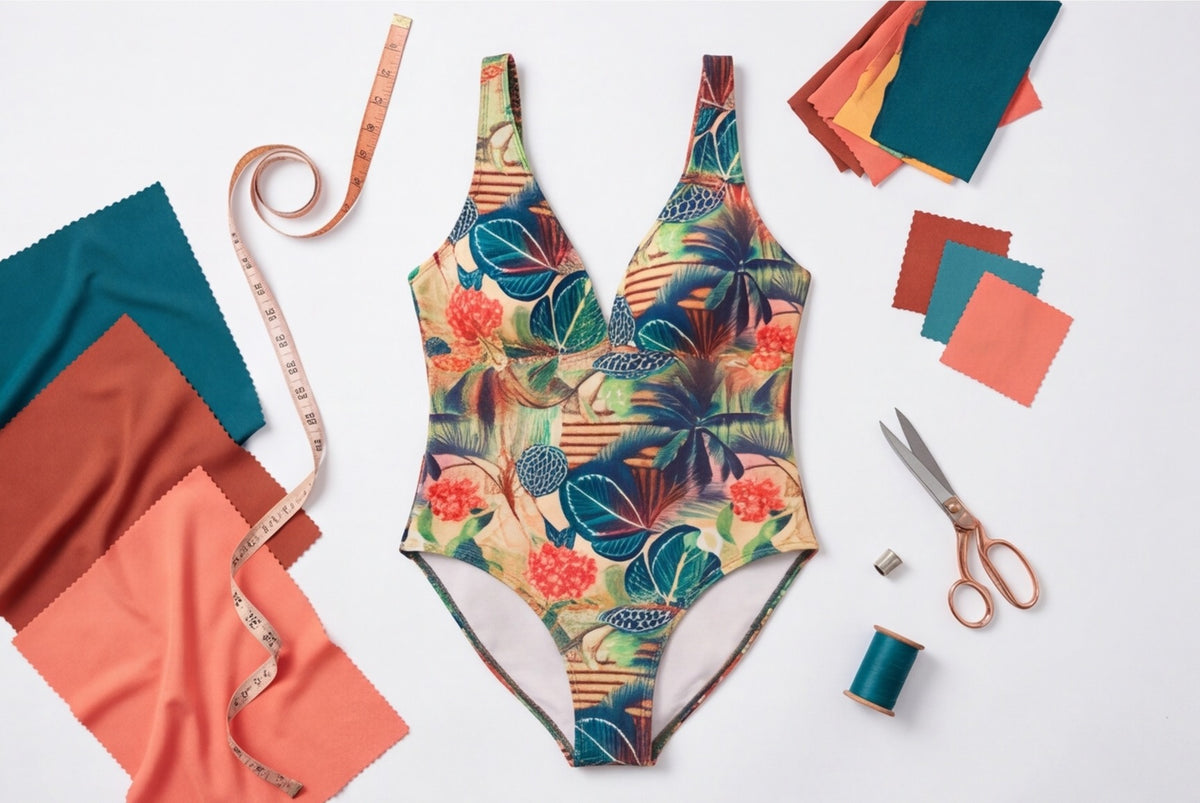
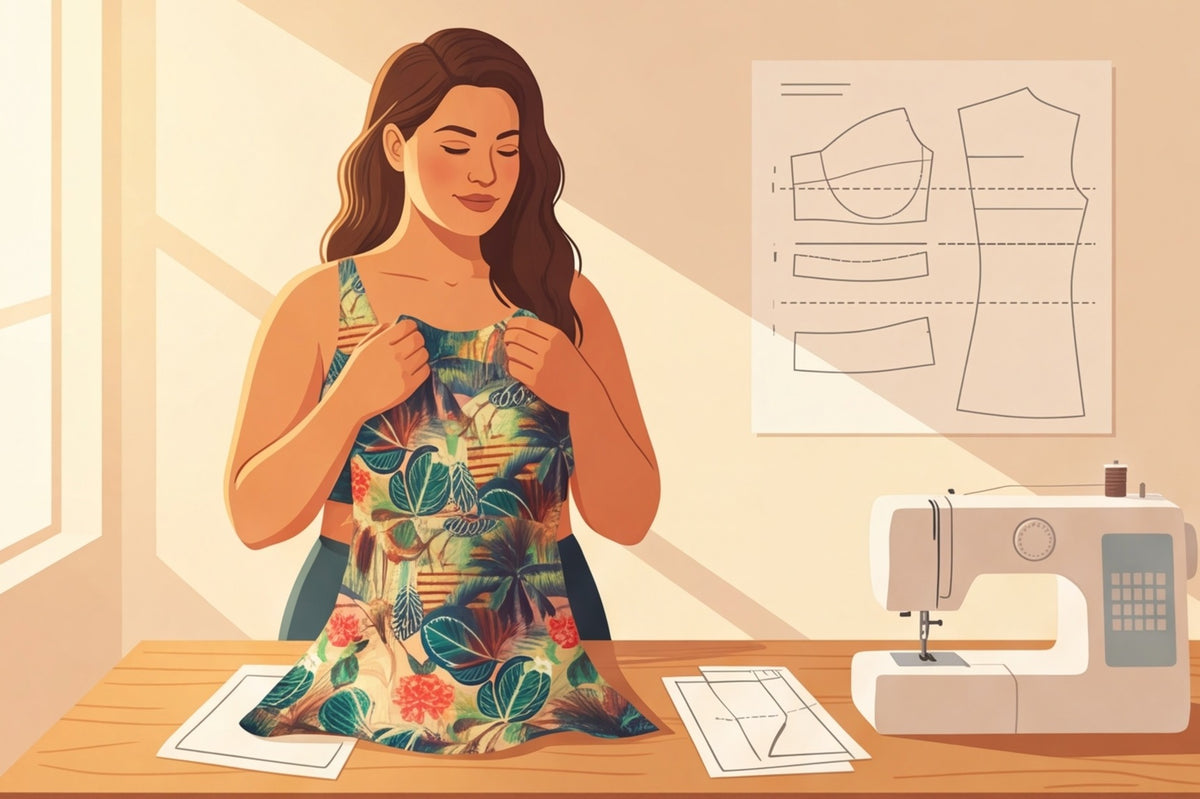
From there, the fabric is drawn and cut specifically for your order. Nothing is pre-cut and waiting in a bin. Once cut, the pieces are hand sewn in Florida. The whole process, from the day you order to the day it arrives with tracking, takes four to six weeks.
What The Five Questions Replace
Consider the ordinary pattern of someone who has bought a top a size up for bust room and a bottom a size down to keep the waist from gapping, piecing together two purchases to end up with one wearable set. The five fit questions are built to remove exactly that workaround. Instead of guessing at a size chart twice, she answers once, about how suits actually sit on her, and the top and bottom get cut to answer that directly.
 SHOPTHE LOOK
This isn't a fast process, and we don't pretend it is. Four to six weeks is longer than pulling a suit off a shelf. But a custom-fitted approach has real, measured advantages: in a comparative study of custom-fitted garments against ready-to-wear, 70% of participants preferred the fit of the custom piece, according to research published via Sagepub. The wait buys something specific: a suit sized to the body that's wearing it, not to an average one.
One Of One: What It Means When Nobody Else Has Your Suit
One of one means we never cut the same fabric in the same shape twice. Once a print is cut for one suit, that combination retires. Nobody ordering after you will get the same fabric in the same cut, which means the suit in your bag is genuinely yours, not one of a run.
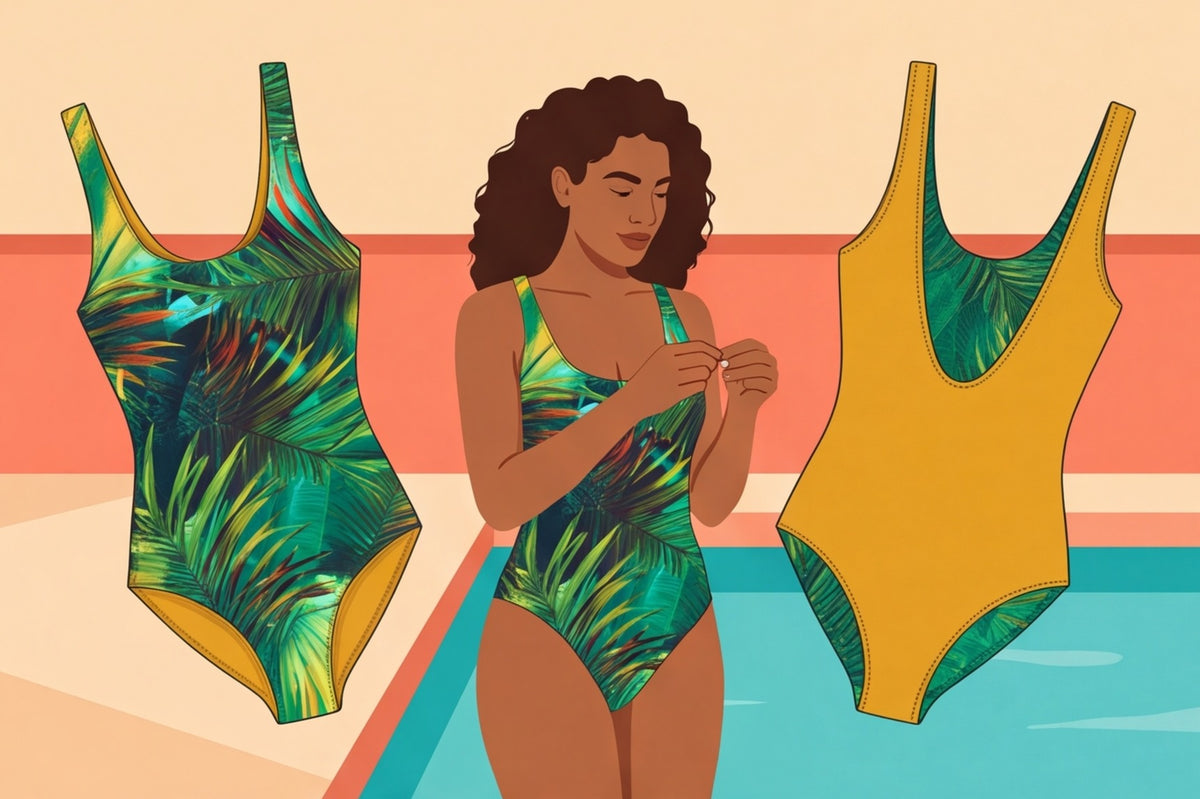
Nothing is cut before you order it. One fabric, one shape, one person. That's the practical meaning behind "one of one," and it's also why we can offer reversible construction on most styles: both faces of the fabric are finished, so one suit gives you two ways to wear it for $395. A reversible top has no built-in shelf bra, because building one in would mean sewing a permanent front and back, which defeats the purpose of a suit that flips.
Where The Name Comes From
Evelin Andrade, the woman behind Ir Al Sol, spent her childhood summers on the Colombian coast, and those summers gave the brand its name: toward the sun. It isn't a claim about where the suits are produced. Every suit is still drawn, cut, and sewn in Florida, by hand, after you order it.
There's something worth sitting with in the idea that a print, once used, doesn't come back. Most of the swimwear world runs the opposite way, with the same handful of patterns reprinted and restocked until everyone at the pool is wearing some version of the same thing. A retired print means the suit stays specific to the person who ordered it.
What Happens If Handmade Swimwear Doesn't Fit The First Time
Every custom order from Ir Al Sol comes with one free adjustment, and shipping is covered both ways if that adjustment is needed. That's the direct answer to the hesitation most people have before ordering something that can't be tried on first: what happens if the band runs a little loose, or the torso needs another half inch between the bust and the leg opening.
 SHOPTHE LOOK
That torso question deserves its own mention, because it's a different problem from the top-and-bottom split. One-piece suits ride up on a lot of women not because of size, but because the suit is cut too short in the distance between bust and leg for that particular torso. We handle this through the same five fit questions rather than a tape measure, and a longer torso costs nothing extra to accommodate. Neither does a fuller cup. The suit adjusts. The person doesn't have to.
The Math On Ordering Once
Compare that to the ordinary cost of bracketing, buying two or three suits to find one workable combination and returning the rest, a pattern common enough that 27% of shoppers now do it as standard practice, according to Popsy Clothing. Ordering once, with an adjustment built in if it's needed, tends to cost less in both money and the particular fatigue of trying on suit after suit that almost fits.
The goal isn't a suit you wear once and photograph carefully. It's one you can put on for a whole season at the beach or the pool without checking whether the top is riding down or the leg is cutting in. That's what the four to six weeks and the free adjustment are actually buying: a suit built to be worn often, in both of your sizes, by the person it was cut for.