
Custom Swimwear vs Off the Rack: What Actually Gets Measured
Key Takeaways
- Research on 150 women's swimwear sizing found only 2 matched traditional bust-waist-hip charts, and nearly half wore different top and bottom sizes.
- Off-the-rack swimwear sizes tops and bottoms from one chest measurement, while custom orders use band and cup for the top and XS to XL for the bottom at no added cost for a fuller cup.
- Average female torso length ranges from about 14 to 19 inches depending on the measurement method, far too wide a range for one fixed pattern to fit everyone.
- Mass-produced knitwear carries an eco-cost 44% higher than on-demand production, a byproduct of cutting inventory before anyone has ordered it.
- A suit cut to order takes four to six weeks from order to door, includes one free fit adjustment, and is never cut in the same fabric and shape twice.
You've seen the word "custom" on a swimwear site, clicked through, and found three prints and four size options. That's a small collection with a nice label. Cutting to order starts from your two sizes and your answers, not from a template someone else already cut.
The distinction matters because so many of us have bought a suit that promised fit and delivered a compromise instead. A top that gapped. A bottom that dug in. A torso that rode up before lunch. Somewhere between the marketing and the seam, the promise of "made for you" quietly became "made in your size range."
We think the difference between custom swimwear vs off the rack comes down to one question: was anything cut before you placed the order? If the answer is no, you're looking at a suit cut to order. If the answer is yes, and you're just picking from what already exists, you're looking at mass customization wearing a nicer name.
Why the Same Size Fits Differently in Every Suit
A medium fits differently in every brand because sizing isn't standardized across the swimwear industry. Each brand grades its own pattern around its own idea of an average body, so the label on the tag tells you almost nothing reliable about how the suit will sit on you.
Most women are not the same size on top as they are on the bottom. Matched sets, the kind sold as a single top-and-bottom size, are cut for one body that carries its proportions evenly. If yours doesn't, and most don't, you're stuck choosing which half of the suit to disappoint.
The Split-Size Reality
Size up for the top and the bottom gapes at the leg. Size down for the bottom and the top loses whatever support it had. Neither choice is a failure on your part. It's what happens when a single number is asked to do two jobs at once.
This isn't a small edge case. Research on women's swimwear sizing found that out of 150 women measured against traditional bust-waist-hip charts, only two matched the chart exactly, and nearly half wore a different size on top than on the bottom. A sizing system that fails 148 out of 150 people isn't measuring the wrong bodies. It's measuring the wrong thing.
Custom Swimwear vs Off the Rack: What Actually Gets Measured
Off-the-rack swimwear is built from a chest circumference and a single size letter. Custom swimwear built to order asks for band and cup on top and XS to XL on the bottom, sized separately, at no added cost for a fuller cup. That's the entire difference in one sentence, and it explains most of the fit complaints we hear.
A chest measurement is not a bra size. It tells you how big around you are, not how your bust is distributed or supported. Two women with identical chest measurements can need completely different cup volume, and a single alpha size (small, medium, large) has no way to capture that.
The Two-Suit Workaround
We hear a version of the same story often enough that it's become a pattern a pattern. A woman buys two full suits, a top from one set and a bottom from another, just to end up with one outfit she can actually wear. That's two purchases, two returns to manage, and still no guarantee the fabrics or colors match.
 SHOPTHE LOOK
Sizing by band and cup for the top and XS to XL for the bottom means both halves are considered on their own terms, in the same order, for one price. A larger cup size is a measurement, not an upgrade, so it never costs more. Here's a simple side-by-side of what each approach actually captures:
| What's measured | Off-the-rack | Custom, cut to order |
|---|---|---|
| Top sizing | Single letter (S/M/L) from chest circumference | Band and cup, sized separately |
| Bottom sizing | Tied to the same letter as the top | XS to XL, chosen independently |
| Torso length | One fixed length for all sizes | Adjustable on request |
| Cost for fuller cup | Often requires sizing up the whole suit | No added cost |
The Long Torso Problem Off-the-Rack Never Solves
One-pieces ride up within an hour at the pool because the torso length is fixed at one measurement for every size on the rack, and that measurement is an average, not a measure of your unique fit. If the distance between your bust and leg is longer than average, the suit has nowhere to go but up.
Torso length varies by inches from one woman to the next. That's a wide range for one fixed pattern to cover. Some retailers do offer a long-torso option, and the difference is usually an inch or two.
Why a Second Size Option Isn't a Real Fix
A binary choice, regular or long, still assumes only two torso lengths exist. It's a better guess, but a guess. And it usually applies to the torso alone, leaving the top-and-bottom mismatch untouched.
A suit cut to order can add length exactly where you need it, between bust and leg, without changing anything else about the fit. We ask five short questions about how suits have behaved on you before, using your own words, not a tape measure. If one-pieces have always ridden up by early afternoon, that's the detail that tells us to lengthen the torso on your order.
What Changes When Nothing Is Cut Until You Order
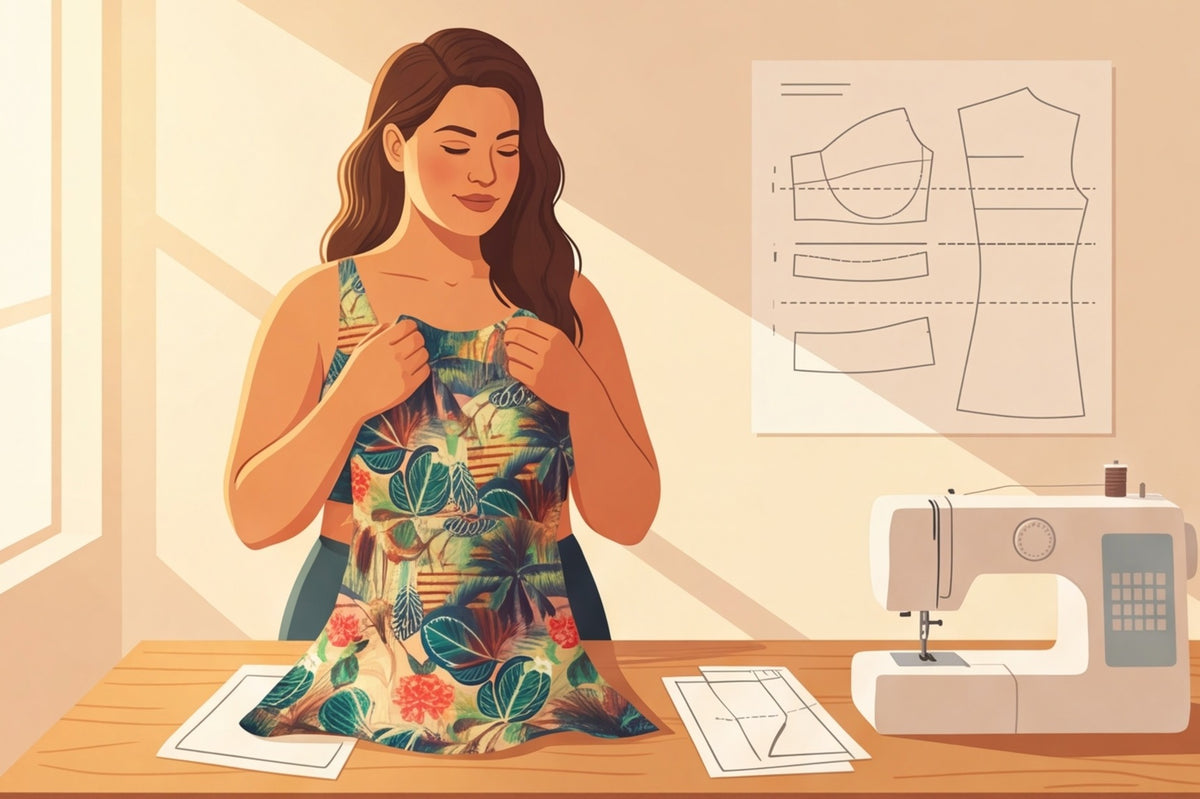
Nothing about a suit is cut until you place the order. That single fact is what separates cutting to order from a brand offering a handful of preset sizes and calling it custom. Your suit is drawn, cut, and sewn in Florida after your order comes in, not pulled from a rack of pre-cut inventory in your size.
The same fabric is never cut in the same shape twice, so the piece on a paddleboard next to you at the pool won't be wearing yours. That's a direct result of cutting to order rather than cutting ahead of demand. Mass production runs the opposite way: identical shapes, identical sizes, identical prints, made before anyone has ordered them, which is part of why on-demand production methods show measurably lower material waste than pre-cut runs, with one packaging analysis putting the eco-cost of mass-produced knitwear 44% higher than on-demand production, according to research published in Techtailors.
The Timeline and the Guarantee
A custom suit takes four to six weeks from order to door, shipped with tracking. That's longer than pulling a suit off a shelf, and we're upfront about it because a suit cut to your band, cup, bottom size, and torso length can't be rushed the way a pre-cut inventory item can.
 SHOPTHE LOOK
If the fit needs a tweak once it arrives, one adjustment is included at no cost, with shipping covered both ways. Evelin, the founder, spent her childhood summers on the Colombian coast, which gave the brand its name: toward the sun. Prints retire once a run of fabric is used and don't come back in a second batch.
- Top sized by band and cup, no upcharge for a fuller cup
- Bottom sized XS to XL, chosen independently of the top
- Torso length adjustable based on five fit questions, no measuring tape required
- Four to six weeks from order to door, with tracking
- One free fit adjustment, shipping covered both ways
That's the practical version of custom swimwear vs off the rack. One approach asks you to fit a pattern drawn for an average body. The other draws the pattern around the two sizes you actually are, and the torso length you actually swim in, before a single cut is made.