
Swimsuit Size Chart: Read Your Top, Bottom and Torso Separately
Key Takeaways
- A swimsuit size chart works best when the top is read by band and cup, while the bottom is read by hip fit and rise.
- A 2024 analysis of 2,246 women, reported by KoreaScholar, found short, regular, and long torso groups even when major circumferences were similar.
- Ir Al Sol cuts the top by band and cup and the bottom by XS to XL, so split sizes can be ordered in one suit.
- Custom Ir Al Sol suits take four to six weeks and include one free adjustment with shipping covered both ways.
A swimsuit size chart is easier to use when we treat it as a set of separate fit decisions: bust and underbust for the top, hips and rise for the bottom, then torso length for a one-piece. Clear landmarks and fit checks matter because the same measurements can produce different results when chart instructions are read differently.
Why One Swimsuit Size Chart Gives Two Different Answers
A swimsuit size chart can point to two sizes because a top and a bottom hold different parts of the body. Read the top and bottom separately first, rather than letting one S, M, or L label decide both halves of a matched set.
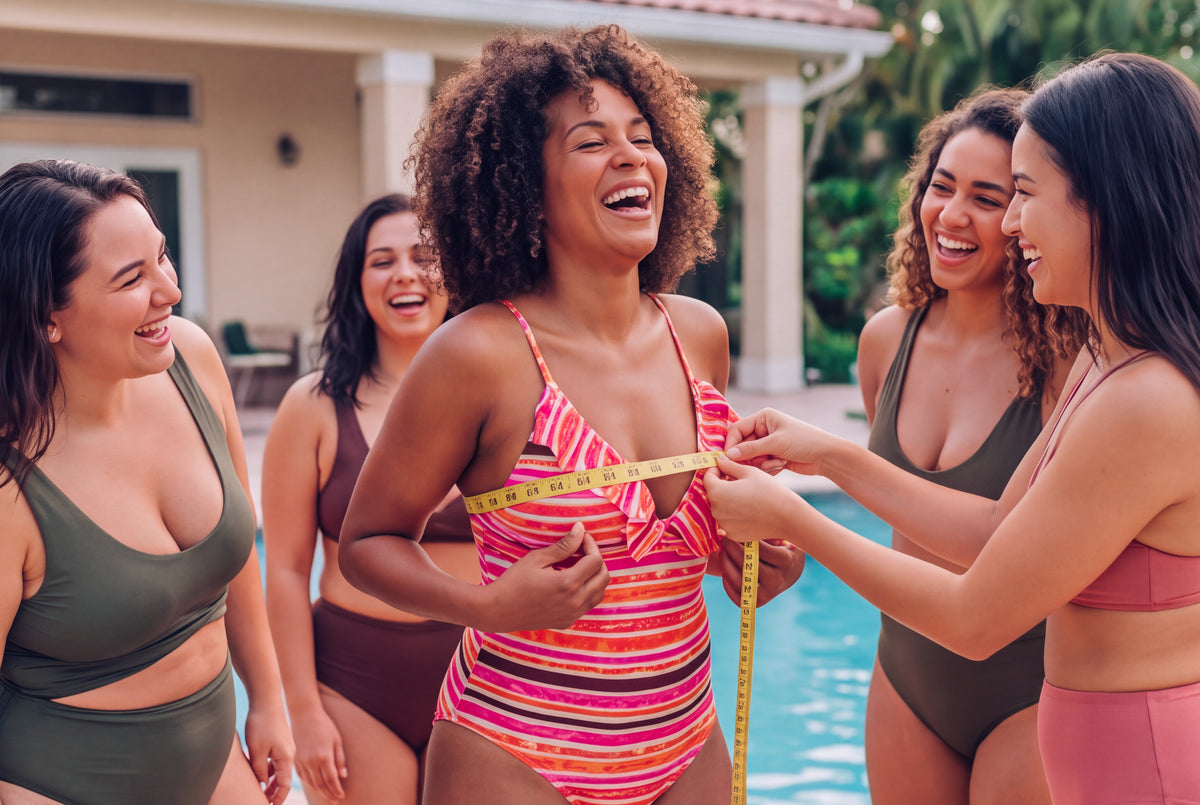
A 2024 study in the Journal of Fashion Marketing and Management found that unclear retailer instructions led shoppers to record bust, chest, and hip measurements that differed significantly from technician measurements. The useful response is measurement confidence: place a soft tape around the fullest bust, directly under the bust for the band, and around the fullest part of the hips. Keep the tape level and close to the body without pulling it tight.
Read each half like a separate shoe width
Think of a matched size like a pair of shoes sold in one width. One number can be close, yet each foot may need something different. A chart can be read the same way, with one line for the bikini top and another for the bottom.
| Part of the suit | Read the chart by |
|---|---|
| Top | Band, cup, underbust, and bust containment |
| Bottom | Hip range, rise, leg opening, and chosen coverage |
| One-piece | Top and hip fit, plus the distance between bust and leg |
Swim sizes vary between brands because each chart uses its own ranges and construction. A size 12 has no universal swimsuit equivalent, and a women’s 36 can mean a regional clothing size, a bra band, or a brand-specific label. Use the measurements and the garment’s fit notes before converting any number.
Start with the fit that needs more precision
Choose the top first when bust support needs the most attention. Choose the bottom first when hip fit, rise, or coverage changes how secure it feels. If one half lands in a different size, that tells you something useful about how the suit fits.
 SHOPTHE LOOK
- Keep the chart’s stated unit, inches or centimeters, consistent.
- Check whether the chart separates underbust from full bust.
- Use the hip range for bottoms rather than a dress-size conversion.
- Read the size notes for stretch and intended coverage.
Reading the Top on a Swimsuit Size Chart: Band, Cup and Bust Support
The best top size begins with the band and cup because a chest measurement is not a bra size. The band holds the top in place around the ribcage, while the cup needs enough room to fully contain the bust.
Lettered tops can group several bra sizes under one label, so one letter covers several band and cup combinations. That overlap explains why two people can share a letter size yet need different adjustments.
Use the band as the anchor
A secure band sits level around the body and stays close when you lift your arms or move through the water. Sizing up an entire top for extra cup room can loosen the band, which changes the support and the way the top stays put.
Band and cup sizing gives a fuller bust a more considered starting point than a single chest range. Swim tops and wired one-pieces are commonly sized by cup and band, whereas swim bottoms follow hip or underwear sizing.
Reversible tops need a direct support check
A reversible top has both faces finished, so it has no built-in bra. Support comes from the cut, band fit, straps, and the fabric’s hold. Check that the cups fully enclose the bust, the band stays level, and the straps sit comfortably without digging.
For a larger cup, a bra-size-based sizing guide for swimwear gives clearer information than a general bust line. We cut our custom tops by band and cup, so the top can be ordered separately from the bottom size.
Reading the Bottom: Hip Fit, Rise and Coverage from XS to XL
Bottom sizing begins at the hips, then moves to rise and coverage. The right bottom stays in place during movement and gives you the coverage you chose, rather than pulling, shifting, or cutting across the hip.
Full coverage describes how much of the back the cut covers, while rise describes where the waistband sits and the leg opening changes the shape around the thigh. Those details affect fit even when two bottoms share the same hip range, and two bottoms both sold as full coverage can still cover noticeably different amounts.
Hip range comes before the letter on the tag
Place the tape at the fullest part of the hips and compare that number to the bottom chart. If you are falling between sizes, use the brand’s fit note and your preferred rise. A firmer waistband can feel better at the larger end of a range, whereas a softer or adjustable style may suit the smaller end.
 SHOPTHE LOOK
Coverage is a separate decision from size. A high-rise bottom may sit higher on the waist, while a higher leg opening changes where the fabric meets the hip. Choose the cut that feels right for your time in the water, then use its stated hip range.
A split-size walkthrough
Consider a composite example: a reader’s hip falls in Small, while her band and cup point to a larger top. She selects the bottom by the Small hip range and the top by band and cup, rather than sizing both halves from one letter.
At Ir Al Sol, the bottom is cut from XS to XL independently of the top. The top is cut by band and cup, so neither half needs to absorb the compromise of a matched set.
Long Torso and One-Pieces: What a Swimsuit Size Chart Leaves Out
One-piece swimsuit sizing needs a third reading: torso length. A suit can match bust, waist, and hips yet still pull upward when the distance between bust and leg is cut too short.
An analysis of 2,246 women ages 20 to 59, reported by KoreaScholar, identified short, regular, and long torso groups despite no significant difference in height or major circumferences. Width-only measurements can therefore miss the part of fit that makes a one-piece feel strained or settled.
Check how the one-piece behaves
You can spot a length mismatch without a tape measure. A one-piece that rides up, pulls at the shoulders, or shifts upward between bust and leg needs more length through the torso. Sizing up may add width everywhere, while the suit still needs added length in one specific place.
Some charts publish separate regular and long torso ranges, and those ranges overlap. They are useful, but the suit's behavior on your body remains the practical check.
Use a simple one-piece fit check
- The neckline and straps stay where they belong when you raise your arms.
- The fabric does not pull upward between bust and leg.
- The leg openings stay in place as you walk and sit.
- The torso feels settled rather than stretched across its length.
We can cut a long-torso one-piece longer between bust and leg based on a few short fit questions. The adjustment belongs in the suit’s construction, where it can address the actual fit need.
When Your Swimsuit Size Chart Is Two Sizes: Buying and Fit Without Measuring
When a chart gives you two sizes, select the top by band and cup, select the bottom by hip fit, and treat torso length as its own one-piece decision. Separate pieces can solve this through two sizes, while a custom suit can be cut in both of your sizes from the start.
Buying two matched suits may create one workable combination, but it can leave an extra top and bottom behind. We cut the top by band and cup and the bottom by XS to XL at no extra cost, using five short questions about how swimwear behaves on you rather than a tape measure.
Use this final fit checklist
- The band stays level and close around the ribcage.
- The cups fully enclose the bust without spillover or empty space.
- The straps stay comfortable and the bottom stays put while moving.
- A one-piece does not pull upward between bust and leg.
A swimsuit should feel close and secure when dry, with room for movement and breathing. Loose fabric can shift in the water, while excessive strain can pull at bands, straps, or torso length. The right size is the one whose fit checks hold during normal movement.
 SHOPTHE LOOK
Made-to-order timing and adjustment
Our custom swimwear is drawn, cut, and sewn in Florida after the order. It takes four to six weeks from order to door, and every custom order includes one free adjustment with shipping covered both ways.
The fit questions give us a clear place to start, and the adjustment gives the suit room to be refined after it arrives. A chart can guide the choice. A suit cut for both halves of you can carry that guidance into the water.